Airlie News

What It Means for a Home to “Sit Well” on a Lot

Some homes just feel right where they are.
They look settled. Balanced. Like the house belongs on that piece of land instead of simply being placed there.
That is what people usually mean when they say a home “sits well” on a lot. It is not one single thing. It is the way the home relates to the land, the street, the trees, the views, the sun, and the spaces around it.
For a custom home, that matters from the very beginning.
It Starts With the Shape of the Land
Every lot has its own personality. Some are wide and open. Some are narrow and deep. Some slope gently, hold mature trees, face the water, or sit close to neighboring homes. A home that sits well takes those conditions into account instead of fighting against them.
The right plan for one lot may feel completely wrong on another. That is why placement, scale, and orientation matter just as much as the floor plan itself.
The Home Should Feel Balanced From the Street
Curb appeal is not only about siding, windows, or landscaping. It also comes down to proportion. Does the home feel too close to the street? Too far back? Too tall for the lot? Too narrow for the space around it?
When a home sits well, it feels balanced from the road or driveway. The entry is easy to understand. The garage does not overwhelm the front. The home has presence without feeling out of place.
It is the kind of thing people notice, even if they cannot always name it.
Sunlight and Views Matter
Where the home sits on the lot affects how light moves through the rooms.
Morning light in a kitchen, afternoon shade on a porch, sunset views from a living room, or tree-filtered light in a bedroom can all change how a home feels day to day.
This is especially important in coastal North Carolina, where outdoor spaces, porches, and natural views are often part of the way people want to live. A well-placed home makes the most of those moments.
Outdoor Spaces Need Room to Work
A house does not end at the exterior walls.
Porches, patios, driveways, walkways, yards, and landscaping all affect how the home lives. A floor plan may be beautiful, but the lot still needs space for outdoor areas that feel useful and natural.
A home that sits well leaves room for the way people actually use the property: pulling into the driveway, walking to the front door, sitting outside, hosting guests, or enjoying a quiet view.
The best placement makes the inside and outside feel connected.
Privacy Is Part of the Plan
How a home sits on the lot can also affect privacy.
Window placement, porch orientation, driveway location, and neighboring homes all matter. A bedroom window facing the wrong direction or a porch too exposed to the street can change how comfortable the home feels.
Good planning looks at more than the house itself. It considers what is around the home and how the space will feel once people are living there.
Trees and Natural Features Can Shape the Design
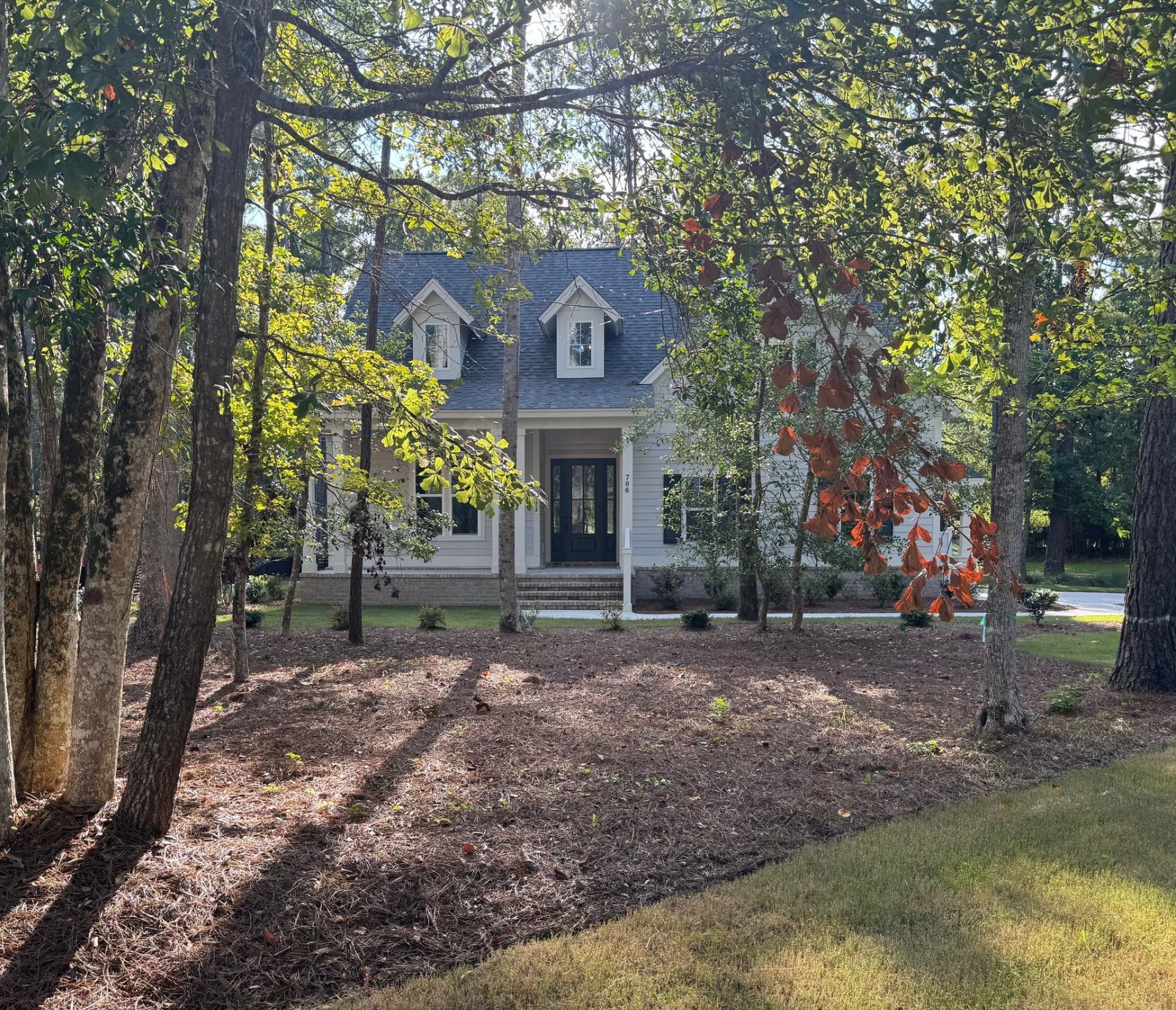
Mature trees, water views, slopes, and natural buffers can make a lot special. When possible, those features should help guide the design. A home may be positioned to preserve a tree, frame a view, create shade, or make an outdoor area feel more private.
These details can give a new home a stronger sense of place. Instead of feeling dropped onto the lot, the home feels connected to it.
A Good Fit Feels Effortless
When a home sits well, the result feels easy. The driveway makes sense. The entry feels welcoming. The porch has a purpose. The rooms get good light. The outdoor spaces feel usable. The home has the right scale for the property.
It is not always something you can see in a floor plan alone. It comes from understanding both the home and the land.
For Airlie Homes, that is part of the work before construction begins. The plan, placement, porch orientation, windows, driveway approach, and outdoor living areas all need to make sense for the specific lot. A home should not just fit within the property lines. It should feel like it belongs there.