
Airlie News

Simple Summer Maintenance Tips for Your Porch, Patio, and Outdoor Areas

In coastal North Carolina, outdoor living isn’t an afterthought. It’s part of how a home is designed from the beginning.
At Airlie Homes, porches, patios, and outdoor spaces are often some of the most used areas of the home. They’re where mornings start, where evenings wind down, and where time with family and friends naturally happens.
With that kind of daily use, these spaces see more wear than people expect, especially through the summer months.
The good news is, keeping them looking clean and well-kept doesn’t require constant upkeep. It just takes a little awareness of what tends to cause wear over time.
Pay Attention to Moisture, Not Just Dirt
One of the biggest factors in how outdoor spaces age along the coast isn’t just dirt, it’s moisture.
Humidity, rain, and shaded areas can all lead to buildup that isn’t always obvious at first. Over time, this can affect the look and feel of surfaces, especially on porches and decking.
Instead of waiting until something looks dirty, it helps to:
It’s less about deep cleaning and more about preventing buildup before it starts.
Be Mindful of Furniture Placement
Outdoor furniture can quietly cause wear over time, especially in high-use areas.
Dragging chairs across the same spots, trapping moisture underneath, or placing heavier pieces in one position for too long can leave marks or uneven aging on surfaces.
A simple way to avoid this is to:
Small adjustments like this can make a noticeable difference over time.
Watch How Sun Exposure Changes Materials
Summer sun can be just as impactful as moisture.
Certain materials may fade, dry out, or change in appearance with consistent exposure. This is especially true for areas that get direct afternoon light.
You don’t need to constantly treat or cover everything, but it helps to:
It’s about understanding how your space interacts with the environment around it.
Keep Airflow in Mind
Covered porches are a staple in coastal homes, but they can sometimes hold onto humidity more than open spaces.
When airflow is limited, moisture tends to linger longer, which can affect both surfaces and furnishings.
Simple things like:
Can help keep the space feeling fresh and dry.
Don’t Let Small Issues Sit Too Long
Outdoor spaces are exposed to more than interior areas, which means small issues can develop a little faster.
Loose boards, minor discoloration, or early signs of wear are much easier to address early on than later.
Taking a quick look around every now and then, especially during the summer, can help you stay ahead of anything that might turn into a bigger project.
A Space That’s Meant to Be Lived In
Outdoor living spaces are meant to be used, not preserved.
Some level of wear is natural, especially in a coastal environment.
The goal isn’t to keep everything untouched, it’s to keep your home looking and feeling well cared for over time.
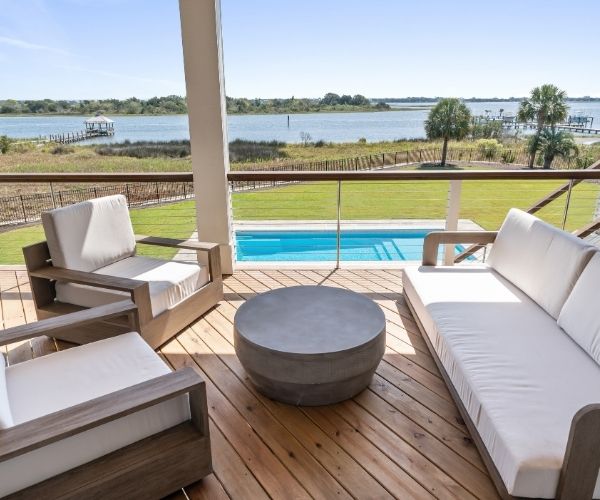
Built for the Way You Live
At Airlie Homes, outdoor spaces are designed to be part of everyday living, not just something you use occasionally.
From covered porches to open-air areas, these spaces are built with both function and longevity in mind, especially in a coastal setting.
If you’re thinking about building or simply exploring what works best for your home, taking the time to understand how these spaces are designed and maintained can make a lasting difference.