
Airlie News

Do You Need a Mudroom or a Drop Zone?

When people start planning a new home, they usually focus on the big spaces first. Kitchen. Primary suite. Living area.
But the small transitional spaces are often the ones that make daily life easier.
That’s where the mudroom and the drop zone come in.
They’re not the most glamorous rooms in a home, but they can quietly change how the whole house functions. The question is, do you need a full mudroom, or would a simple drop zone do the job?
It depends on how you live.
What Is a Mudroom?
A mudroom is typically a dedicated space, often near the garage or a side entry, designed to handle the mess of everyday life.
Shoes. Backpacks. Jackets. Beach towels. Sports gear. Pet leashes.
It usually includes built-in storage, benches, hooks, cubbies, and sometimes even a utility sink. In coastal North Carolina, mudrooms can be especially helpful for sandy shoes, wet umbrellas, and everything that comes in from the outdoors.
A true mudroom is more than just a hallway. It’s a buffer between outside and inside.
If you have kids, pets, or an active lifestyle, a mudroom can keep the rest of your home feeling organized without constant effort.
What Is a Drop Zone?
A drop zone is simpler and usually smaller.
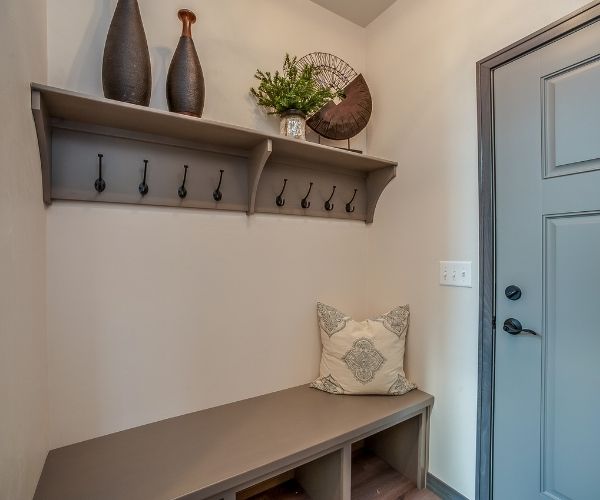
It might be a built-in cabinet near the garage entry. A bench with hooks along a short wall. A small nook designed to catch keys, bags, and mail before they make it to the kitchen counter.
A drop zone doesn’t require a full room. It’s more about intentional placement.
If your household is smaller, or if you prefer a more minimal layout, a drop zone can accomplish the same purpose without taking up as much square footage.
It’s less about containing mess and more about containing clutter.
How to Decide What You Actually Need
The best way to decide is to think through your routine. Begin by asking yourself these questions:
If you’re constantly redirecting items away from the kitchen island or living room, a dedicated mudroom might be worth it.
If your needs are lighter and you mostly want a place for keys and coats, a drop zone might be enough.
In coastal communities, guests are common. When you live near the water, friends and family suddenly have a reason to visit more often. Having a place for extra shoes, towels, and bags can make the house feel more relaxed when people come over.
Coastal Living Changes the Equation
Living along the North Carolina coast adds a layer to the conversation. Sand has a way of following you home. So does salt air and rain from quick coastal storms.
In areas like Wilmington, Hampstead, Southport, and surrounding coastal communities, many homeowners find that having some kind of transition space near an entry makes everyday living easier.
It doesn’t have to be oversized. It just needs to be intentional.
You Don’t Have to Choose Just One
In some floor plans, a mudroom and a drop zone can overlap. A smaller mudroom with built-in storage can function as both.
The goal isn’t to add space just to say you have it. It’s to design a home that works for how you actually move through it.
These are the kinds of decisions that don’t always seem important at first. But a year after move-in, they’re often the spaces homeowners appreciate the most.
Planning a Home That Works Day to Day
At Airlie Homes, we think a lot about how homes function beyond the big, open spaces. The flow from garage to kitchen. The path from the back door to the laundry room. Where daily life lands when you walk in the door.
In the homes we’ve built throughout this part of the Carolina coast, we’ve come to realize that how a house handles everyday clutter can be just as important as how it looks on move-in day.
Mudroom or drop zone. Big or small. It comes down to what makes your everyday routine feel easier.
And that’s always worth thinking through.